
Lore-Layering
A weirdly tedious part of the writing process.

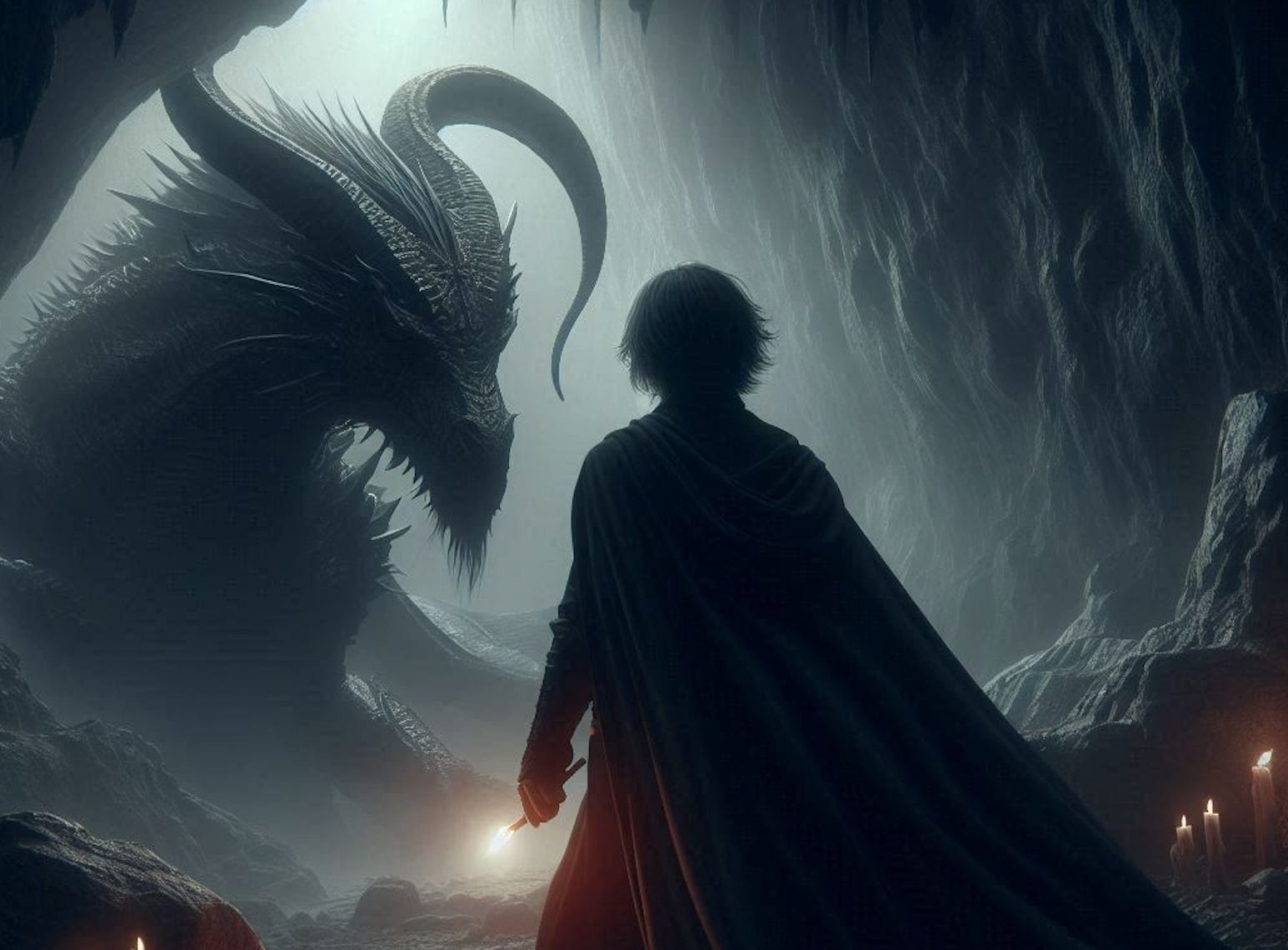
There’s nothing I love more than a blank word file full of potential. That blinking bar feels like a countdown. The clack of the keys feels like I’m being timed for performance, and yes, I’m a far more fluent and fast typer than I am a speaker in real-time.
But I’m at a pretty isolating point in my process. The first book is done- sort of. The first chapters have been through beta reading and I’m immensely grateful to those who have taken a look at these chapters and pointed out where they’re working and (thankfully this is rarer) where they aren’t.
So I’m in the wonderful process of rewrites, brainstorming, and bouncing ideas off of whoever (or whatever) will listen. My book exists. It’s written, but it’s not quite ready for the world. It’s like a kid’s toy that’s been mostly assembled, in a way that you can play with and enjoy, but all the little stickers and decals that make it really look like what it is are not on, yet. And because my dark fantasy story is ambitious, complex, and deeply layered mythically, I always feel like something is coming up a little short.
Usually convenience is a great thing. We love it when it coincides with open checkout lanes and efficient drive-thrus, but for a writer, it’s CANCER. Our job is usually to make things a little harder on our characters instead of easier, because watching people figure out problems is very fun for readers, and shortcuts are maligned by serious authors and readers alike.
An example of this is in The Lord of the Rings: The Fellowship of the Ring, where Frodo is instructed by Gandalf to meet him at an inn in Bree near the beginning of the hobbits’ journey. Tolkien could have written this like a vacation planner, scheduling their arrival to neatly intersect with Gandalf’s so they can all continue on their merry (and Pippin) way. Instead, he approached this part of the plot like a writer. Gandalf is detained by a traitor, and the hobbits kind of have to wing it for a bit and take a chance on a tall, dark, and handsome stranger named Strider.
An example in my own book is summarized below. As I originally wrote this, I was following my own internal logic about how this country treats people with this world’s particular magical plague.
The tailor escapes his viking-coded “funeral” in Nord by rowing instead of burning. He falls asleep in his boat, and through his ability to navigate dreamspaces and use their magic to alter and tweak his circumstances, he makes it safely to the Suden Country, rocking up to the harbor of their capital city, Tower.
These two countries haven’t had contact in a long time, so the harbor is in dilapidated disuse. The tailor pulls his boat to shore and is spotted by a couple of guards who mistake him for a drunkard out on a late-night adventure. They mock him lightly as they help him but slowly realize that he’s not from around here. Identifying him as Giftsick, they process him like anyone else Giftsick and put him in prison for the night to await transport to a colony specially designed for the infected and dying.
This worked OK in early drafts. The tailor isn’t aggressive or threatening. He’s a damp, scrawny guy in a funeral shroud that no one would perceive as a threat. The fact that he made it across a dangerous sea in a boat just built to be set on fire for a funeral is suspect, but otherwise he’s a courteous enough guest in a foreign country.
Problems started when I began layering on the lore. There is obviously a reason these countries haven’t been interacting, and once I started exploring that more and really digging into the reason the tailor, specifically, MUST lead this story, the problems popped up in response to the intrigue.
In the Suden country, the (not wholly accurate but widely known) myth is:
500 years ago, a soothsayer came from Nord and something she did created this horrible disease. Now it’s killing humans faster than they’re being born. Nordlanders are really bad news, especially creepy ones who seem god-touched.
I also added, for fun, a few physical details that make Nordlanders look different from characters born in the Suden Country. They have skin like seashells, very pale and tinted slightly blue. They scar in silver, scaled patterns when they’re burned by the sun (weaker in their country), chemicals, or fire. Their freckles are silver. They don’t grow hair below their eyelashes, whether male or female. There is a bioluminescence to their veins in low lighting and cold temperatures that mimic the deep sea. They’re not selkies or mer, but I mean, those vibes are definitely there, and the myths and stereotypes in the Suden Country lean into them.
Giftsick also carries some extremely prominent visual tells. The afflicted have “moon-marked” eyes that serve as an indicator for how far along they are in their disease. Over the six-month course, the moon phases show up, from crescent to full, milky and glowing slightly as they eat up the color in the sufferer’s eyes.
These changes are elegant. They’re fun. I’m keeping them. But bouncing these additions off my husband made me want to die inside, a little, back in November.
“So,” he said, “You’ve got a myth that everyone knows from childhood, as pervasive as Adam and Eve. You’ve got a heavy and dehumanizing stigma against Nordlanders. You’ve got a magical plague that is, to their knowledge, absolutely the fault of a doombringer from THAT country, resulting in a xenophobic culture that has locked down their borders. Then you’ve got this guy rocking up, looking weird, with some knowledge of their language and under the clear protection of their wrathful god. They would probably just shoot him, or take him directly to THEIR god.”
I was on my way out of the door at the time. I had a dress rehearsal that night. He apologized immediately when he noticed how quiet I was, but I said, “No, thank you, you’re right. I appreciate that.”
“It’s probably going to be a ton of rewrites,” he said, sounding super sorry, but I’ve edited for others, and been able to more easily see the forest for the trees. I knew immediately that I’ve got this.
“Actually, I think it just needs one fix, and it ultimately makes everything that follows richer and deeper,” I said.
Here’s what changed.
The tailor escapes his viking-coded “funeral” in Nord by rowing instead of burning. He falls asleep in his boat, and through his ability to navigate dreamspaces and use their magic to alter and tweak his circumstances, he makes it safely to the Suden Country, rocking up to the harbor of their capital city, Tower.
These two countries haven’t had contact in a long time, so the harbor is in dilapidated disuse. The tailor pulls his boat to shore and is spotted by a couple of guards who mistake him for a drunkard out on a late-night adventure. They mock him lightly as they help him but slowly realize that he’s not from around here.
They also notice, on closer inspection, that this guy is probably trouble. He is wearing a holy color while dressed like a corpse, survived an improbable voyage, is obviously Giftsick in his first month, speaks their language, and has the complexion of a drowned man. They’re freaked out. Instead of processing him like any sick citizen, they take him directly to the queen regent and primary antagonist of the first three books. She is an overwhelming and obviously powerful presence who demonstrates her cruelty on the guards, but not the tailor, surprising everyone in the room by deeming the tailor a totally non-doombringer who can be processed normally like all the other Giftsick. She also puts on a show of cold-reading him based on the clothes he brought. He dresses very well for a tailor, and this isn’t punished in his country. The god declares that he’s obviously a noble, and that he should be treated that way.
The plot proceeds as it did. He ends up in prison for a night before the journey to the Hinterlands, and meets a companion who shares his tendency to meet trauma with humor (she’s just more cheeky about it.)
This was a relatively easy fix, but a month later I’m still going through with my metaphorical caulking, and fixing little patches where the mythology is not mything and the backstory is leaking too fast or too slowly. One benefit of working on all four books at once is that I can see the trajectory of what beats have to land and where. I know the moral hinges and the ending it ALL builds toward. I know the plot beats and the planned POV for all of these books and sections.
I hate flashbacks. In a story where makers are at war with matter and creators are at war with consumers, where gods can take away agency and certain humans can walk in dreams, I shouldn’t need them. But the backstory is important. The backstory I recently added is a much more complex fix than what my husband’s little catch required.
What I had before:
The tailor was born with the ability to dreamwalk. It’s how he got sick. It’s why he was exiled.
What I have (and what I’m patching) now:
The tailor was born with the capacity to dreamwalk, observable in unusually talented apprentices of artisans. At 12, he was marked for the honor of being his tribe’s next “soothsayer,” a holy position meant to shield his country’s borders from a terrible disease that manifested 500 years ago. It meant abandoning his apprenticeship and many other aspirations, including friendship and marriage, to live isolated and study the language of dreams.
He learns on the morning of the ritual that this “honor” is actually more like blunted living death. After months of sensory deprivation, guided dream journeys and drugged encounters with their god, he learns that his tribe uses a person like him each generation to intentionally anchor a channel, open it, and then collapse it by disabling that person. Their “soothsayers” are broken people who require constant care and are hidden from the tribe because their ruination is so terrible to behold.
He wakes early from the ritual, choosing and shielding himself before he can be “closed.” This is what makes him a black sheep in his tribe, someone who has to conditionally earn back his own personhood and future-placement before it’s all ripped away when he gets sick- something the successful ritual would have prevented. When he is exiled it’s an “I told you so” moment for his tribe’s elders, who can legitimately say that they saw this coming because SOMEONE was being selfish and not going gentle into that good night.
The tailor learned to view love as in direct correlation to his usefulness. He has extremely strong views on autonomy, agency, and consent that inform every single one of his decisions in this story. As a powerful “unclosed” living weapon who can dream of a god’s death (and actually make it so), that makes him both terrifying and terrified.
I’m pretty sure that’s a great backstory, and much better. This poor guy.
But for everyone asking when my book will be done, well, it’ll be when it feels like a temple for these gods. They should resonate and feel present even when they’re not in the scenes. Trauma and damage and healing and repair all feature heavily in the magic system, and right now I’m trying to make it all rhyme.
I beg patience, and peace. I promise this will be worth it in a few more months with a few more beta readers.